

Sleep can feel like a quiet pause. The body becomes still, awareness fades, and the outside world temporarily disappears.
Inside the brain, however, the night is far from inactive. Neural activity changes, blood flow shifts, and cerebrospinal fluid begins moving in coordinated patterns. These nighttime processes are connected to an important maintenance network known as the glymphatic system.
Understanding this system gives us another reason to see sleep not as lost time, but as an essential period of brain care.
The Brain Does Not Simply “Switch Off”
The brain is constantly active. Even during a quiet day, billions of nerve cells exchange electrical and chemical signals, use energy, and produce metabolic by-products.
Elsewhere in the body, the lymphatic system helps collect excess fluid and cellular waste. Brain tissue does not use conventional lymphatic vessels in quite the same way.
Instead, it appears to rely partly on pathways surrounding blood vessels, movements of cerebrospinal fluid, and drainage routes connected to the membranes around the brain. Together, these processes form what researchers call the glymphatic system.
Think of it as nighttime maintenance—not a magical “brain detox.” Fluid movement is one part of a much larger network that helps the brain maintain a stable internal environment.
What Is the Glymphatic System?
The word glymphatic combines two ideas: glial cells and the lymphatic system.
Glial cells were once described mainly as support cells for neurons. Scientists now know that they also help regulate the brain’s environment, protect nerve cells, and participate in fluid movement.
Astrocytes, a star-shaped type of glial cell, surround many of the brain’s blood vessels. Their end-feet contain water channels called aquaporin-4, or AQP4, which are believed to play an important role in fluid exchange around brain tissue.
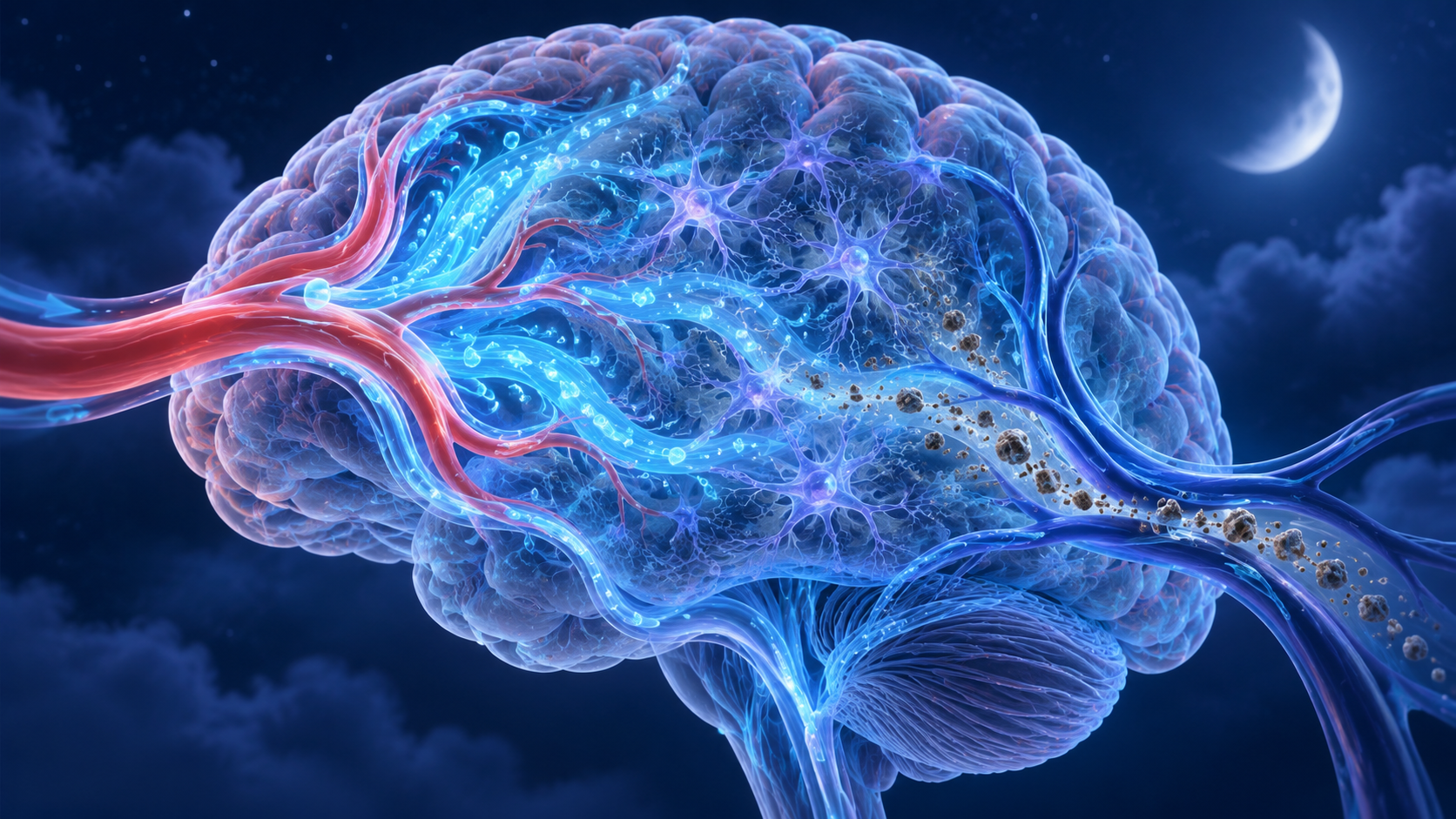
The glymphatic system is therefore not a single organ or tube. It is a proposed brain-wide fluid-transport network involving cerebrospinal fluid, interstitial fluid, glial cells, and spaces around blood vessels.
How Does This Fluid Network Work?
Cerebrospinal fluid, often shortened to CSF, surrounds the brain and spinal cord. It cushions these delicate structures while also helping transport nutrients and waste.
Fluid Enters
According to the glymphatic model, cerebrospinal fluid moves into spaces surrounding arteries.
Fluids Exchange
CSF exchanges with interstitial fluid—the fluid found between brain cells.
Solutes Move Out
Fluid and dissolved substances move toward routes associated with veins, brain membranes, and lymphatic drainage outside the brain.
Researchers are still studying how much of this transport is driven by bulk flow, diffusion, vascular pulsation, respiration, and other forces. The details remain an active area of science, especially in humans.
Why Sleep Makes Such a Difference
More Space Between Cells
A landmark mouse study found that the space between brain cells expanded during sleep and that amyloid-beta and other substances were cleared more efficiently.
Large CSF Waves
Researchers later detected large waves of cerebrospinal fluid coordinated with neural and blood-flow changes during human NREM sleep.
Slower Tracer Clearance
Another human study found that one night of sleep deprivation reduced the clearance of an MRI tracer from multiple brain regions.
Deep Sleep Brings Several Rhythms Together
During deep non-rapid eye movement sleep, the brain produces slow electrical waves. These are linked with changes in blood volume and large oscillations of cerebrospinal fluid.
Neural Activity Slows
Slow electrical rhythms become more prominent during deep NREM sleep.
Blood Volume Shifts
Brain blood volume rises and falls in rhythm with these changes.
CSF Oscillates
Cerebrospinal fluid moves in large, coordinated waves.
Rather than acting like a simple drain, the sleeping brain appears to coordinate neural activity, circulation, and fluid dynamics. This is one reason sleep quality matters alongside sleep duration.
What Is the Brain Trying to Remove?
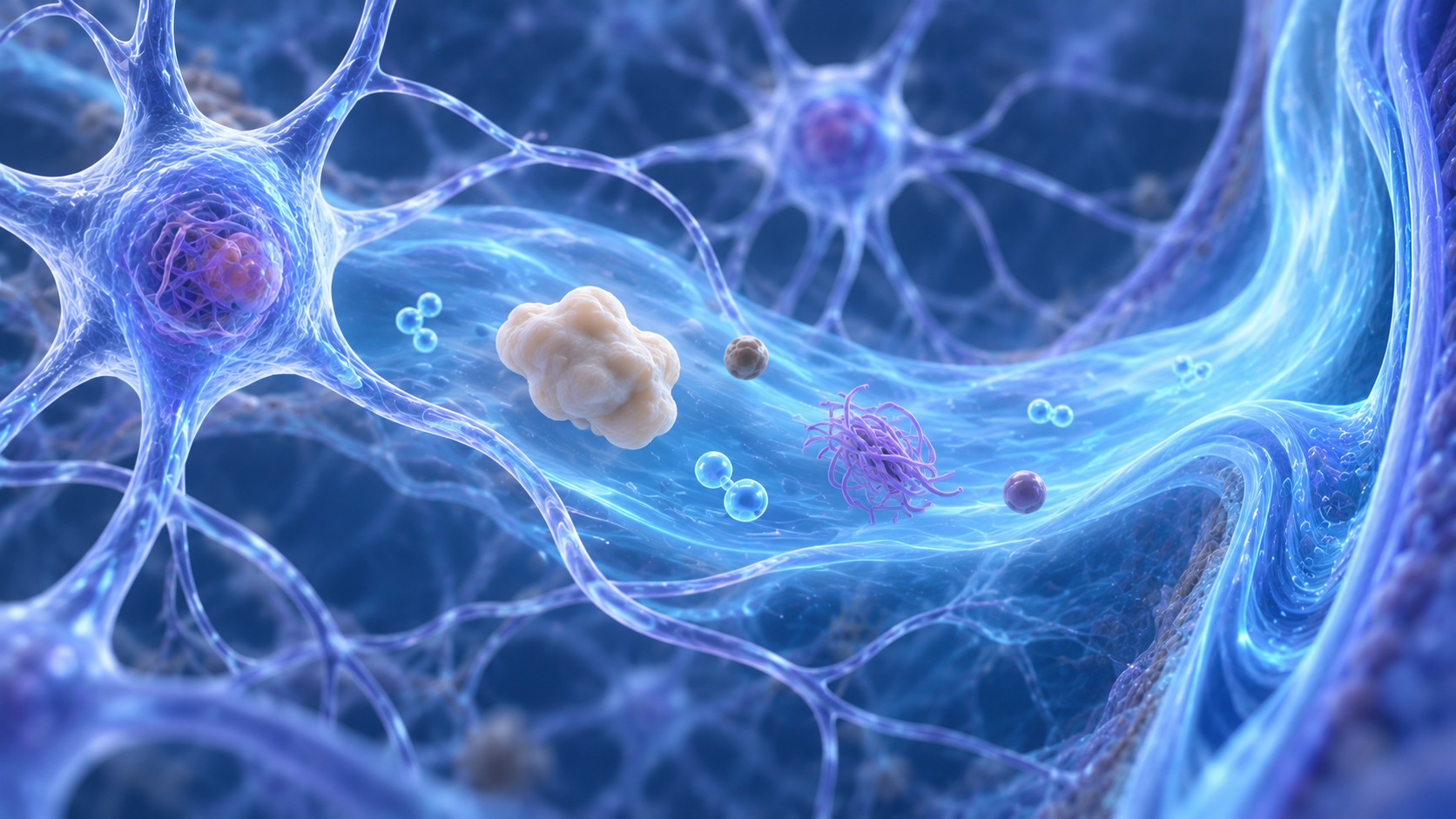
The glymphatic system is often described as the brain’s “waste-clearance system.” The comparison is useful, but it can be oversimplified.
The brain also uses other clearance mechanisms, including transport across the blood-brain barrier, cellular breakdown, and immune activity. It would therefore be inaccurate to suggest that one good night can remove every unwanted substance.
What Happens When Sleep Is Repeatedly Disrupted?
A single restless night does not mean the brain has failed to maintain itself. The body is adaptable, and sleep naturally varies from one night to another.
Problems become more relevant when poor sleep is persistent. Repeated sleep loss can affect attention, memory, emotional regulation, metabolism, and cardiovascular health.
Research is also investigating how chronic sleep disruption, aging, and vascular health relate to glymphatic function. The relationships are complex, and scientists have not established a simple cause-and-effect formula.
Can You “Boost” the Glymphatic System?
Online claims often recommend special sleep positions, supplements, massage, extreme hydration, or detox programs to improve glymphatic clearance. Direct human evidence for most of these strategies remains limited.
What Evidence Supports
- Sleep is associated with changes in brain-fluid dynamics.
- Human studies connect sleep with tracer transport and clearance.
- Consistent, restorative sleep supports overall brain health.
What Remains Uncertain
- Whether a particular sleep position improves human brain clearance.
- Whether supplements or “detox” programs enhance glymphatic function.
- How indirect imaging markers translate into long-term outcomes.
Six Ways to Support Restorative Sleep
The most reliable approach is not to chase a quick brain-cleaning technique. It is to build habits that support healthy, consistent sleep.
Keep a Regular Schedule
Going to bed and waking at similar times helps stabilize the body’s circadian rhythm.
Allow Enough Time
Most adults need at least seven hours, although individual sleep needs vary.
Prepare the Bedroom
A cool, dark, quiet environment reduces stimulation and protects sleep continuity.
Reduce Evening Light
Dimming screens and bright lights can support the natural transition toward sleep.
Move During the Day
Regular activity and daytime light help reinforce healthy sleep-wake rhythms.
Create a Wind-Down Routine
Reading, gentle stretching, meditation, soothing music, or a warm bath can help the body settle.
Caffeine, nicotine, heavy meals, and alcohol close to bedtime can interfere with sleep. Alcohol may initially cause drowsiness, but it can make sleep lighter and more fragmented later in the night.
Creating a Calmer Evening with Spooky2 Scalar
A quiet evening routine can help the mind step away from daytime stimulation. Spooky2 Scalar offers three ways to shape the experience around your needs.
Pure Scalar
Rest within the non-contact Scalar field while reading, meditating, listening to calming music, or practicing gentle breathing.
Molecular Scalar
Use a suitable essential oil according to the operating instructions to introduce its molecular signature into the session and create a more soothing evening experience.
Rife Scalar
When paired with GeneratorX Pro, choose an appropriate wellness program—such as Sleep, Brain Relaxation, or another calming option—to complement the Scalar field.
The goal is not to force a “brain detox.” It is to create calmer conditions for relaxation and restorative sleep.
Sleep Is Active Brain Maintenance
The sleeping brain is not inactive. It is changing its electrical rhythms, reorganizing information, regulating circulation, and coordinating fluid movement.
The glymphatic system gives us a fascinating view of this hidden nighttime work. Although researchers are still defining how it functions in humans, the evidence continues to strengthen the connection between sleep and brain maintenance.
A consistent sleep schedule may seem ordinary, but it supports something extraordinary: the brain’s ability to care for its internal environment while we rest.
References
- Xie L, et al. “Sleep Drives Metabolite Clearance from the Adult Brain.” Science, 2013. View study
- Fultz NE, et al. “Coupled Electrophysiological, Hemodynamic, and Cerebrospinal Fluid Oscillations in Human Sleep.” Science, 2019. View study
- Eide PK, et al. “Sleep Deprivation Impairs Molecular Clearance from the Human Brain.” Brain, 2021. View study
- Lee S, et al. “Contrast-Enhanced MRI T1 Mapping for Quantitative Evaluation of Putative Dynamic Glymphatic Activity in the Human Brain in Sleep-Wake States.” Radiology, 2021. View study
- National Heart, Lung, and Blood Institute. “Healthy Sleep Habits.” Read guidance