

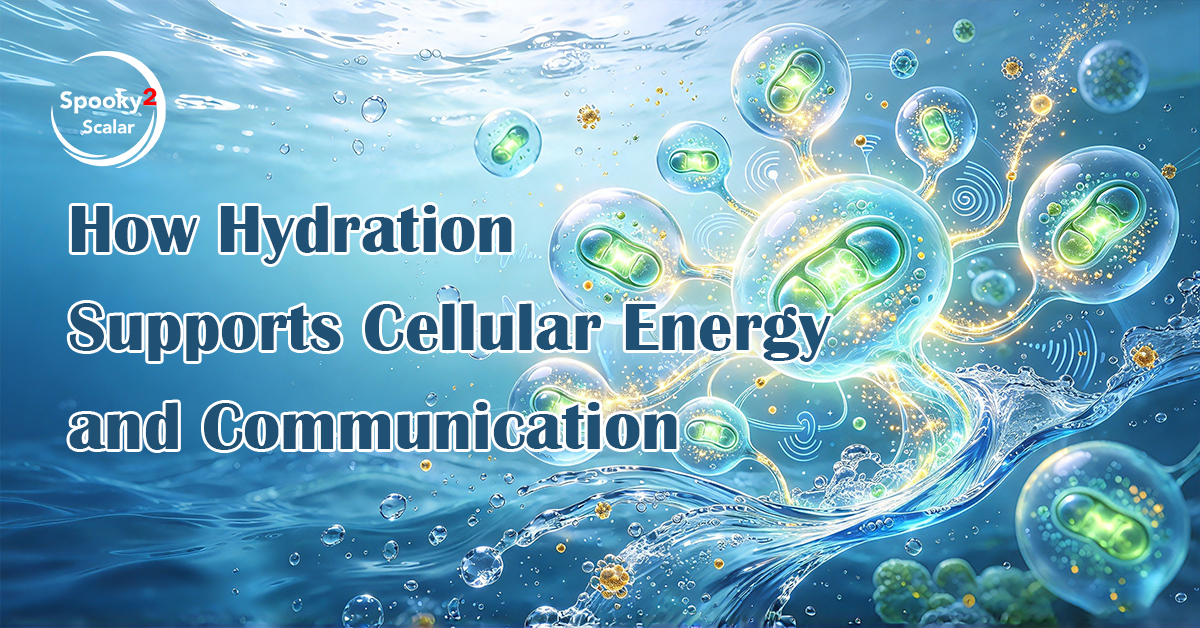
Water may appear simple, but inside the body, it supports nearly every process that keeps cells active and connected.
It provides the fluid environment in which nutrients move, biochemical reactions take place, electrical gradients are maintained, and cellular waste is carried away. Cells do not generate energy or communicate in isolation. They depend on their surrounding environment to receive resources, respond to signals, and maintain internal balance.
Hydration is therefore about more than relieving thirst. It helps create the conditions cells need to produce energy and communicate effectively.
Water Creates the Environment Cells Need
Water is found inside cells, in the fluid surrounding tissues, and throughout the blood and lymphatic system.
It acts as a solvent, allowing nutrients, electrolytes, hormones, enzymes, and metabolic products to dissolve or move through body fluids. Inside each cell, thousands of biochemical reactions take place within this water-based environment.
Water also moves across cell membranes according to the concentration of minerals and other dissolved substances. This movement helps cells maintain their normal size, pressure, and internal balance.
Hydration Supports Cellular Energy
Water does not provide calories in the way carbohydrates, fats, and proteins do. However, the body cannot use these nutrients effectively without an adequate fluid environment.
Energy production begins with the delivery of oxygen and nutrients to cells. Blood carries glucose, fatty acids, amino acids, minerals, and oxygen throughout the body. Cells then use these resources to produce adenosine triphosphate, commonly known as ATP.
ATP is the usable form of energy that powers essential cellular activities:
Hydration helps maintain the blood volume needed to deliver these resources. It also provides the medium in which metabolic reactions occur, supports temperature regulation, and helps carry waste products away from tissues.
This is why inadequate hydration can sometimes be accompanied by tiredness, reduced concentration, or a general feeling of low energy.
Water and Electrolytes Support Cellular Communication
Water and electrolytes work together.
Electrolytes are minerals—including sodium, potassium, calcium, magnesium, and chloride—that carry an electrical charge when dissolved in body fluids.
Cells carefully maintain different concentrations of these minerals inside and outside their membranes. Potassium is found at a higher concentration inside most cells, while sodium is more concentrated outside.
This difference creates an electrochemical gradient across the cell membrane. Specialized proteins use ATP to maintain this gradient, helping regulate cell volume while preserving the electrical conditions needed for cellular activity.
Calcium ions also act as important cellular messengers. After a receptor detects a signal, calcium movement inside the cell can help carry that message forward and influence metabolism, movement, secretion, or other cellular responses.
Water does not create these messages by itself, but it provides the environment in which charged particles and chemical messengers can move.
Hydration Helps Messages Travel Through the Body
Not all communication happens between neighboring cells.
Hormones and other chemical messengers often travel through the bloodstream to reach distant tissues and organs. Blood also delivers oxygen and nutrients while carrying carbon dioxide and metabolic waste away.
Because water is a major component of blood, fluid balance supports the transportation network connecting cells throughout the body.
Adequate hydration helps maintain circulation so that cells can receive the resources they need and release substances they no longer require. In this way, hydration supports communication not only within individual cells but across tissues, organs, and body systems.
The Body Constantly Regulates Fluid Balance
The body has several systems for keeping water and electrolytes within a stable range.
The brain monitors changes in the concentration of the blood. When more water is needed, thirst increases, while hormonal signals instruct the kidneys to conserve fluid.
At the same time, the kidneys regulate sodium, potassium, and other dissolved substances. This allows the body to respond to changing conditions such as physical activity, temperature, diet, and daily water loss through breathing, sweating, digestion, and urination.
Hydration needs are not identical for everyone. They can vary according to:
Older adults can also experience a less noticeable thirst response, making consistent hydration habits especially useful.
Simple Ways to Support Hydration
A healthy hydration routine does not need to be complicated.
- Drink water regularly instead of waiting until you feel very thirsty.
- Increase fluid intake during exercise, hot weather, or heavy sweating.
- Include water-rich foods such as fruits, vegetables, and soups.
- Pay attention to thirst, dry mouth, darker urine, headaches, or unusual fatigue.
- Avoid forcing excessive amounts of water in a short period.
Plain water is an excellent choice, but it is not the body’s only source of fluid. Herbal tea, milk, soups, fruits, vegetables, and other foods and beverages also contribute to daily hydration.
For most people eating a balanced diet, regular meals help replace the electrolytes lost during normal daily activity. Additional electrolyte drinks are generally most useful during prolonged exercise, heavy sweating, or other situations involving greater fluid and mineral loss.
Infusing Water With a Scalar Imprint
Spooky2 Scalar can also be used to imprint drinking water with scalar energy.
To prepare Scalar-imprinted water, place a clean container of water directly on the Transmitter coil. The Transmitter introduces the Scalar imprint into the water, allowing the water to carry this energetic information after it is removed from the system.
Scalar-imprinted water provides a convenient way to incorporate scalar energy into everyday hydration. It can be prepared regularly and consumed throughout the day without making a wellness routine feel complicated.

Supporting the Body From the Inside Out
The body functions as a connected network rather than a collection of separate parts.
Cells depend on water to receive nutrients, maintain electrical gradients, exchange messages, and carry out their normal metabolic activities. Hydration supports this network by helping maintain circulation, electrolyte balance, cellular energy use, and communication throughout the body.
Drinking regularly, including water-rich foods, and responding to changes in temperature or activity can all help maintain a more stable internal environment.
By adding a Scalar imprint to drinking water, an ordinary daily habit can become another simple way to bring scalar energy into a consistent whole-body wellness routine.