

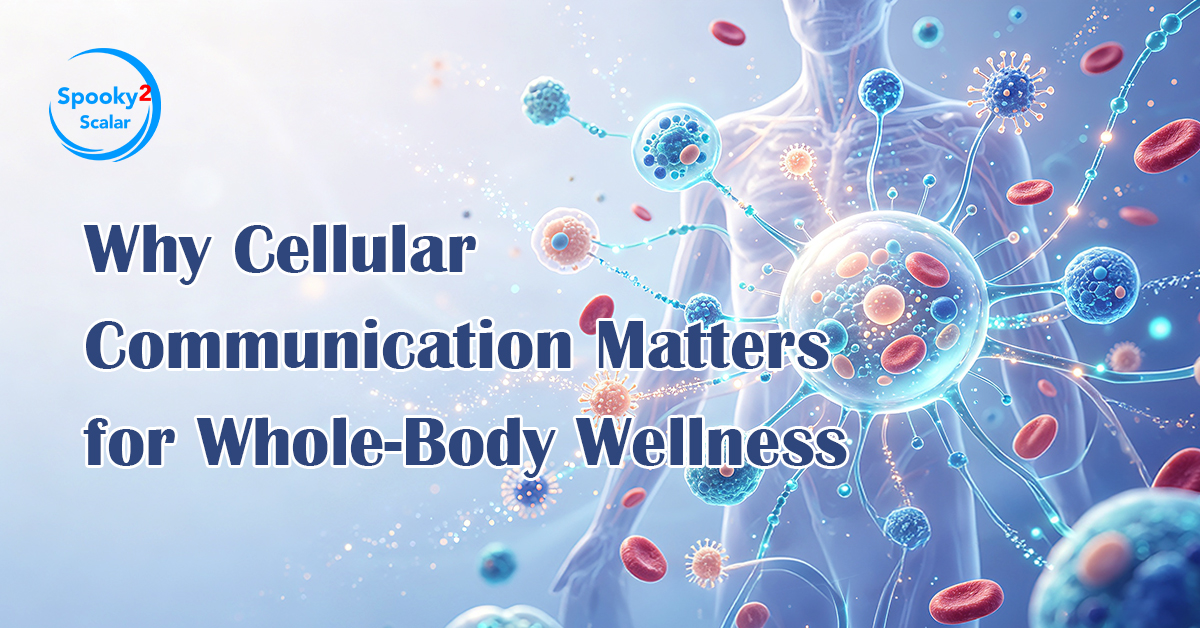
The human body is not a collection of separate organs working independently. It is an enormous communication network.
Every second, cells throughout the body are sending, receiving, and interpreting signals. Nerve cells transmit information. Hormones travel through the bloodstream. Immune cells release chemical messengers. Neighboring cells can even exchange small molecules directly.
Together, these signals help the body coordinate everything from energy use and digestion to immune responses, tissue repair, and adaptation to stress.
This constant exchange of information is known as cellular communication, and it is one of the foundations of whole-body function.
Cellular Communication: The Body’s Internal Language
A cell cannot function effectively by simply responding to what is happening inside itself. It also needs information about what is happening around it.
Cells therefore use several different forms of communication.
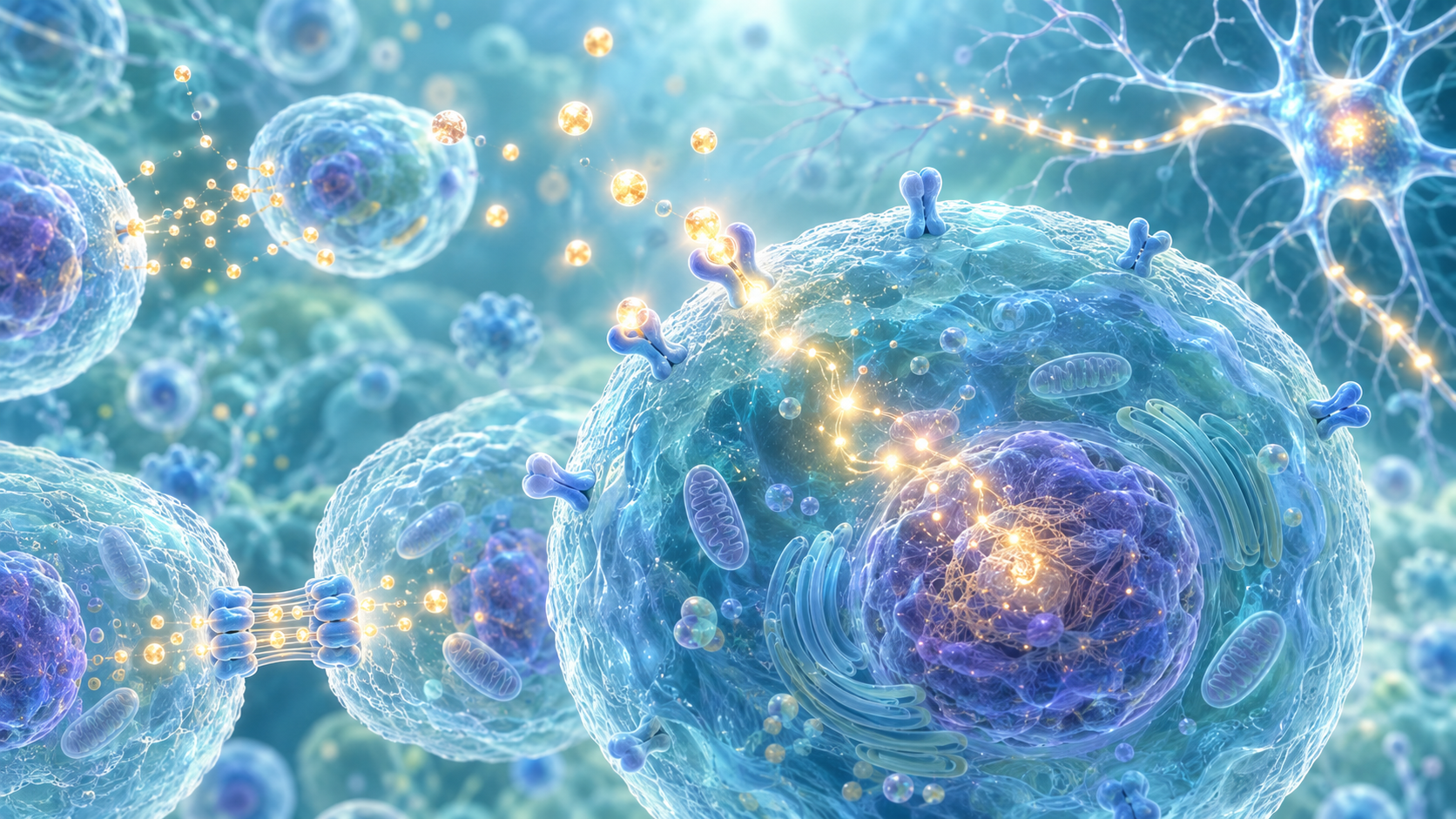
Some signals act locally. A cell can release chemical messengers that influence nearby cells. Other signals, such as hormones, travel through the bloodstream and carry information to distant parts of the body. Neurons communicate through rapid electrical impulses and neurotransmitters, while neighboring cells can exchange ions and small molecules through structures known as gap junctions.
The message is only part of the process.
A target cell must also have the correct receptor to recognize that message. Once the receptor is activated, the signal is carried inside the cell through a series of molecular events that can influence metabolism, movement, gene activity, secretion, growth, or other cellular behaviors. Source
In simple terms:
Multiply this process across trillions of cells, and it becomes easier to understand why communication is so important to the body as a whole.
Why Good Communication Matters Beyond a Single Cell
Cellular communication helps individual cells work together as tissues, organs, and interconnected systems.
A 2024 scientific review described cell-to-cell communication as fundamental to physiological regulation, metabolism, development, immune responses, tissue maintenance, and homeostasis. Rather than acting alone, cells continuously coordinate their behavior according to information received from other cells and from their surrounding environment. Source
This coordination can be seen throughout the body.
The Nervous System
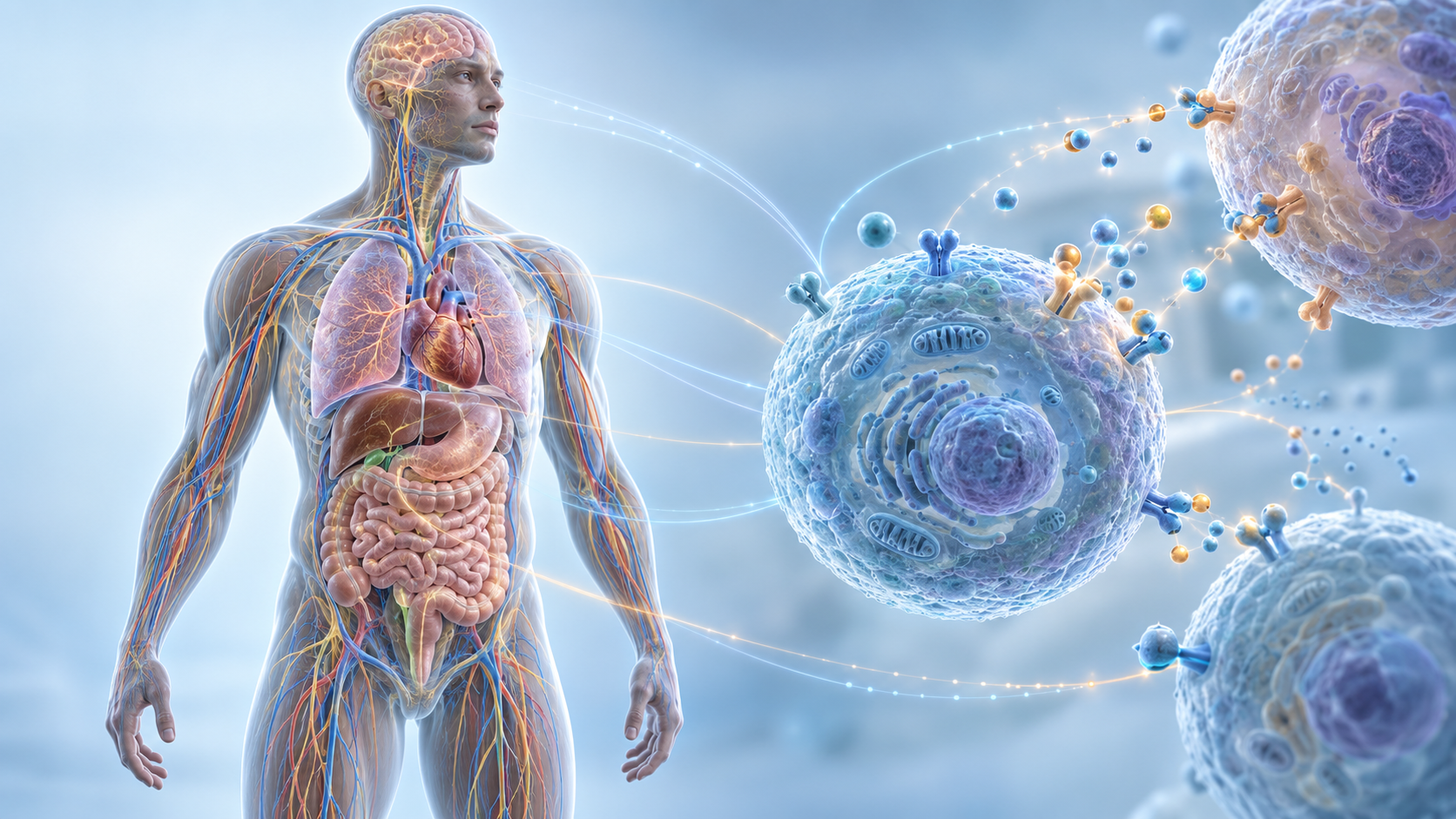
Neurons use electrical and chemical signals to rapidly communicate with other neurons, muscles, glands, and organs.
These networks allow the body to respond to the outside world while continuously adjusting internal functions such as heart rate, breathing, digestion, movement, and alertness.
The Endocrine System
Hormones provide another long-distance communication system.
Released into the bloodstream, hormones can reach cells far from where they were produced and help coordinate processes such as metabolism, growth, blood glucose regulation, reproduction, and responses to stress. Source
The Immune System
Immune cells are also constantly exchanging information.
Chemical messengers such as cytokines allow different immune cells and surrounding tissues to coordinate their responses. Communication also occurs between the immune, nervous, and endocrine systems, helping the body adjust to changes and maintain internal stability. Source
Tissue Repair
Repair requires communication too.
When tissue is damaged, different cells must detect the change, send signals, recruit other cells, regulate inflammation, rebuild tissue, and eventually bring the repair response to an end.
Modern research increasingly shows that communication between immune cells and tissue-resident cells plays an important role in coordinating these repair and regeneration processes. Source
The body is therefore healthiest not simply when individual cells are functioning, but when those cells can coordinate their activities appropriately.
When the Signals Become Less Balanced
Cell signaling is dynamic. It changes according to the body's internal and external environment.
Stress, inflammation, aging, metabolic changes, injury, and other physiological challenges can influence signaling networks. Cells may become more sensitive to certain messages, less responsive to others, or alter the signals they send.
This does not mean that every health problem is simply a “communication problem.” Human biology is far more complex.
However, it does show why researchers increasingly look beyond individual cells and study the networks connecting cells, tissues, organs, and body systems.
Whole-body wellness depends heavily on coordination.
Creating a Better Environment for the Body
Supporting health therefore involves more than focusing on one organ at a time.
- Restorative sleep
- Balanced nutrition
- Regular physical activity
- Healthy circulation
- Stress regulation
- Adequate recovery
Sleep, nutrition, physical activity, circulation, stress regulation, and recovery all contribute to the physiological environment in which cells operate.
When the body is constantly under strain, it must continually adapt its signaling and regulatory systems. When there is adequate rest and recovery, the body has a better environment in which to carry out its normal self-regulating processes.
This whole-body perspective is also useful when thinking about energy-based wellness approaches.
Where Spooky2 Scalar Fits Into the Bigger Picture
The Spooky2 Scalar Transmitter and Receiver work together to create a coherent scalar field throughout the space between them. When the body is placed within this field, cells throughout the body are exposed to the same stable energetic environment.
Cells need energy to maintain membrane activity, exchange signals, transport nutrients, and coordinate with surrounding tissues. By delivering gentle, coherent energy throughout the field, Spooky2 Scalar is designed to support cellular communication and healthy cellular activity.
Because the field encompasses the whole body, its support is not limited to one isolated area. This whole-body approach helps support balance, vitality, circulation, and recovery as part of a daily wellness routine.
Final Thoughts
Every heartbeat, movement, immune response, hormonal adjustment, and repair process depends on countless cells exchanging information.
No cell truly works alone.
Modern biology continues to reveal just how interconnected these communication networks are, from direct signals between neighboring cells to long-distance conversations between the brain, immune system, endocrine system, and other organs.
Understanding cellular communication therefore changes the way we think about wellness.
Instead of viewing the body as a collection of independent parts, we can begin to see it as a coordinated system—one that constantly communicates, responds, adapts, and works to maintain balance.
Supporting that internal environment is one of the foundations of whole-body wellness.