

Glaucoma is often called the “silent thief of sight” for a reason.
Unlike many eye problems that quickly cause pain, redness, or obvious blurring, the most common form of glaucoma can develop slowly for years with few noticeable warning signs. By the time a person realizes part of their vision is missing, some damage to the optic nerve may already have occurred.
Glaucoma is actually a group of eye diseases that damage the optic nerve, the nerve responsible for carrying visual information from the eye to the brain. If that damage continues, peripheral vision can gradually decline and more serious vision loss can follow.
What Is Glaucoma?
Light entering the eye is converted into electrical signals by the retina. The optic nerve then carries those signals to the brain, where they are interpreted as the images we see.
Glaucoma gradually damages this communication pathway. In many cases, this damage is associated with increased intraocular pressure (IOP), although glaucoma can also occur when eye pressure falls within the normal range.
The important point is that glaucoma is not simply a matter of having a particular eye-pressure number. What matters is how well an individual optic nerve tolerates pressure and other stresses over time.
Why Is Glaucoma Called the “Silent Thief of Sight”?
The most common form, open-angle glaucoma, usually develops slowly. Early on, central vision can remain clear and everyday life may feel completely normal.
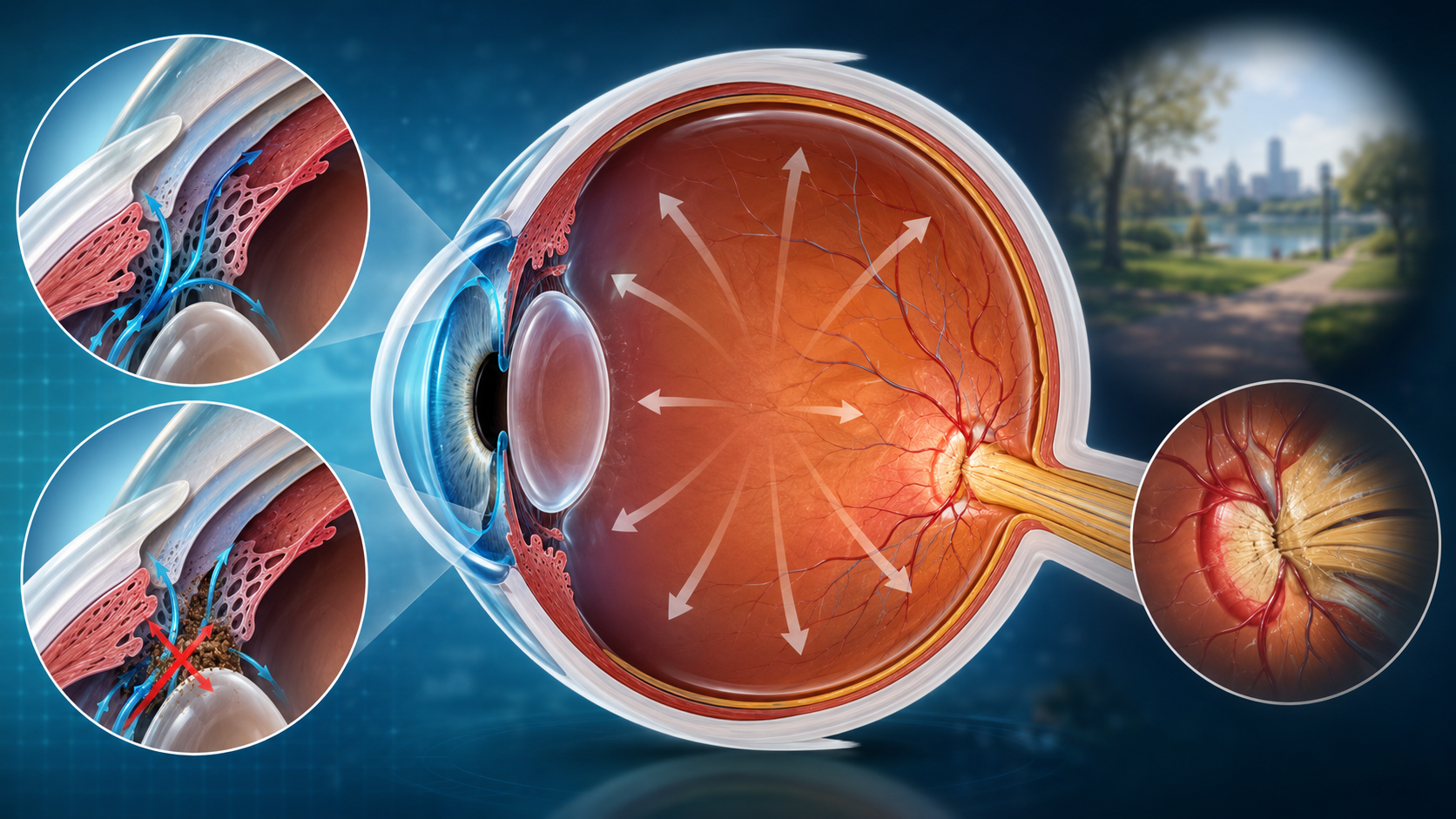
As the disease progresses, the visual field may become increasingly narrow. Everyday activities such as driving, walking through unfamiliar places, or noticing objects from the side can become more difficult.
Vision already lost from glaucoma generally cannot be restored, which is why detecting the disease before significant damage occurs is so important.
Understanding Eye Pressure and the Optic Nerve
The front of the eye contains a clear fluid called aqueous humor. This fluid is constantly produced and normally drains through tissue near the point where the iris and cornea meet.
When drainage becomes less efficient, fluid can accumulate and increase pressure inside the eye. Over time, excessive pressure may place stress on the delicate nerve fibers that form the optic nerve.
The Main Types of Glaucoma
Open-Angle Glaucoma
The drainage angle remains open, but fluid moves through the drainage tissue less efficiently. Pressure and optic nerve damage can develop gradually over many years.
Normal-Tension Glaucoma
Characteristic optic nerve damage develops even though measured eye pressure remains within the statistically normal range. Some optic nerves appear more vulnerable than others.
Angle-Closure Glaucoma
The iris blocks the eye's drainage pathway, sometimes causing pressure to rise rapidly and producing sudden, severe symptoms.
Who Is More Likely to Develop Glaucoma?
Anyone can develop glaucoma, but several factors can increase the likelihood of optic nerve damage.
Increasing Age
Risk rises with age, making regular eye examinations increasingly important later in life.
Family History
Having a parent, sibling, or close relative with glaucoma can increase personal risk.
Elevated Eye Pressure
Higher intraocular pressure is one of the strongest known risk factors for open-angle glaucoma.
Vascular & Metabolic Health
Diabetes and certain cardiovascular factors can be associated with increased glaucoma risk in some people.
Eye Anatomy
Differences in drainage angle, corneal thickness, and optic nerve structure can influence risk.
Ethnic Background
Glaucoma risk and the most common glaucoma types vary among different populations.
How Is Glaucoma Detected?
Early glaucoma may not change how your eyesight feels, so detection depends on examining the eyes rather than waiting for symptoms.
Eye Pressure Measurement
Tonometry measures intraocular pressure and helps identify people who may require closer monitoring.
Optic Nerve Examination
A dilated examination allows the eye doctor to inspect the retina and optic nerve for structural changes.
Visual Field Testing
This checks peripheral vision and can reveal areas of visual-field loss that may not yet be noticed in daily life.
Optic Nerve Imaging
Modern imaging can measure retinal nerve fibers and help doctors track structural changes over time.
Can Glaucoma Be Treated?
Treatment cannot usually restore optic nerve tissue that has already been permanently damaged. Instead, the goal is to slow or stop further damage and protect the vision that remains.
Prescription Eye Drops
Different medications either reduce fluid production or improve drainage to help lower pressure inside the eye.
Laser Treatment
Laser procedures can improve drainage and lower intraocular pressure for some forms of glaucoma.
Surgery
When additional pressure reduction is needed, surgery can create or improve pathways for fluid to leave the eye.
Everyday Ways to Protect Long-Term Eye Health
Glaucoma cannot always be prevented, but healthy routines can help protect overall eye, nerve, and vascular wellness.
Keep Regular Eye Appointments
Comprehensive eye examinations are the most important way to detect glaucoma before major vision changes occur.
Follow Prescribed Treatment
Glaucoma treatment works by protecting future vision, even when you do not notice an immediate difference.
Support Cardiovascular Health
Healthy blood pressure, physical activity, appropriate blood sugar management, and avoiding smoking support overall vascular health.
Protect Your Eyes
Protective eyewear helps reduce the risk of serious eye injuries that can sometimes contribute to secondary glaucoma.
Know Your Family History
If glaucoma runs in your family, share that information with your eye doctor and encourage relatives to have regular examinations.
Support Healthy Sleep & Recovery
Consistent sleep, relaxation, and a balanced daily routine support broader nervous-system and whole-body wellness.
Why Regular Eye Checks Matter So Much
With glaucoma, waiting until vision feels different can mean waiting too long.
Supporting Overall Eye Wellness With Spooky2 Scalar
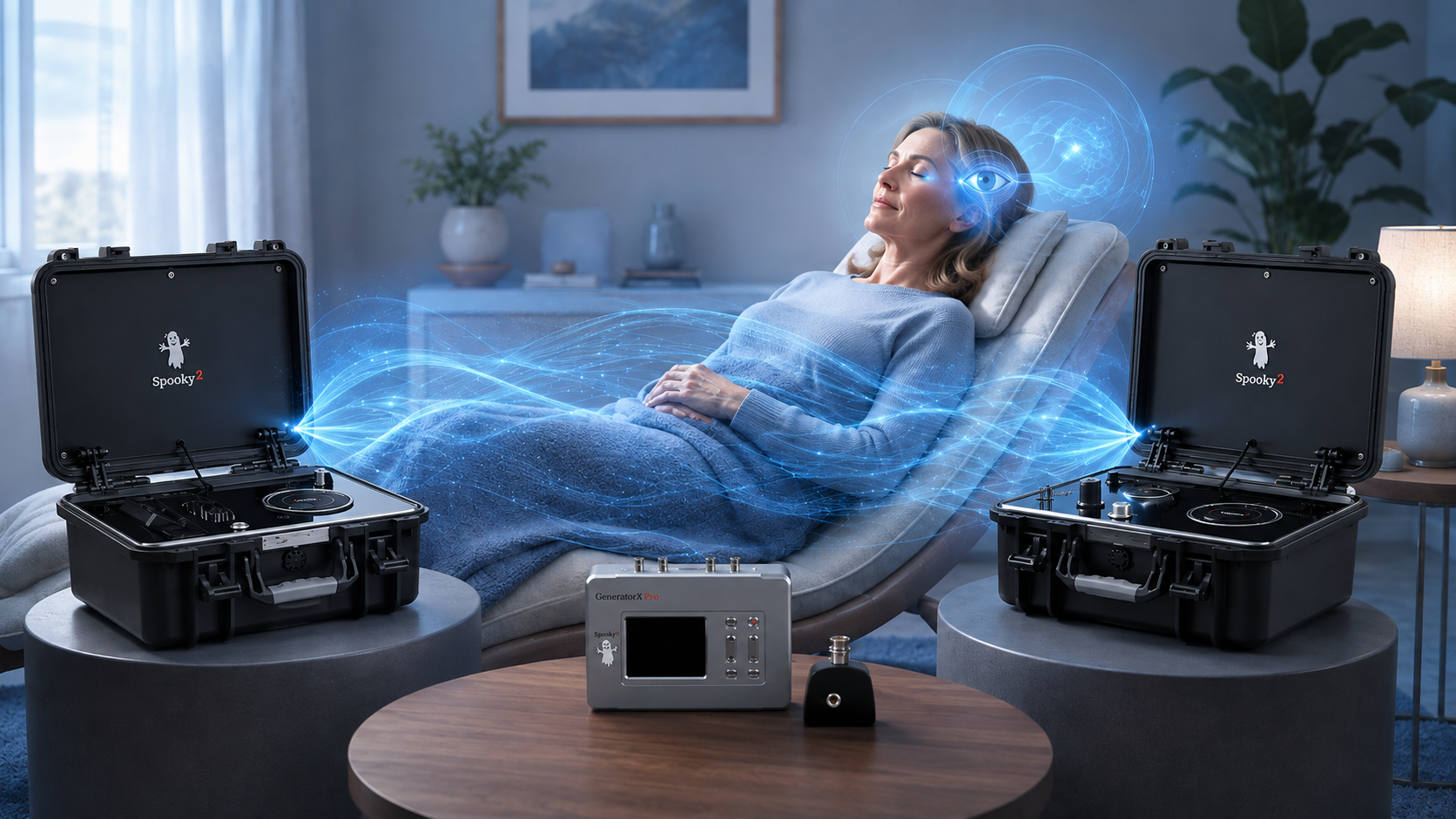
Spooky2 Scalar creates a Scalar energy field between the Transmitter and Receiver, surrounding the body in a gentle environment that may support relaxation, nervous-system balance, cellular vitality, and natural recovery.
For eye wellness, this can become part of a broader daily routine focused on healthy sleep, relaxation, reduced stress, and overall cellular support.
Scalar Energy Field
Creates a calm whole-body environment that can be incorporated into a regular relaxation and recovery routine.
Molecular Scalar
Can be explored with personally selected nutritional or wellness substances that support general eye health.
Rife Scalar
Users can explore related programs using terms such as Glaucoma, Eye, Vision, or Optic Nerve for more focused wellness support.
Final Thoughts
Glaucoma is dangerous not because it always causes dramatic symptoms, but because it often does the opposite.
Vision can feel completely normal while small areas of the optic nerve are gradually being damaged. That is why early detection and regular eye examinations are so important.
Modern treatment can help protect remaining vision for many years, while healthy daily routines can support broader eye, vascular, and nervous-system wellness.
National Eye Institute — Glaucoma
National Eye Institute — Types of Glaucoma
National Eye Institute — Glaucoma and Eye Pressure
Centers for Disease Control and Prevention — About Glaucoma