


When most people think of acid reflux, they picture the familiar burning sensation of heartburn. But reflux does not always feel that way.
Some people repeatedly clear their throat, wake up with a hoarse voice, develop an unexplained dry cough, or feel as though something is stuck in their throat—without experiencing much heartburn at all.
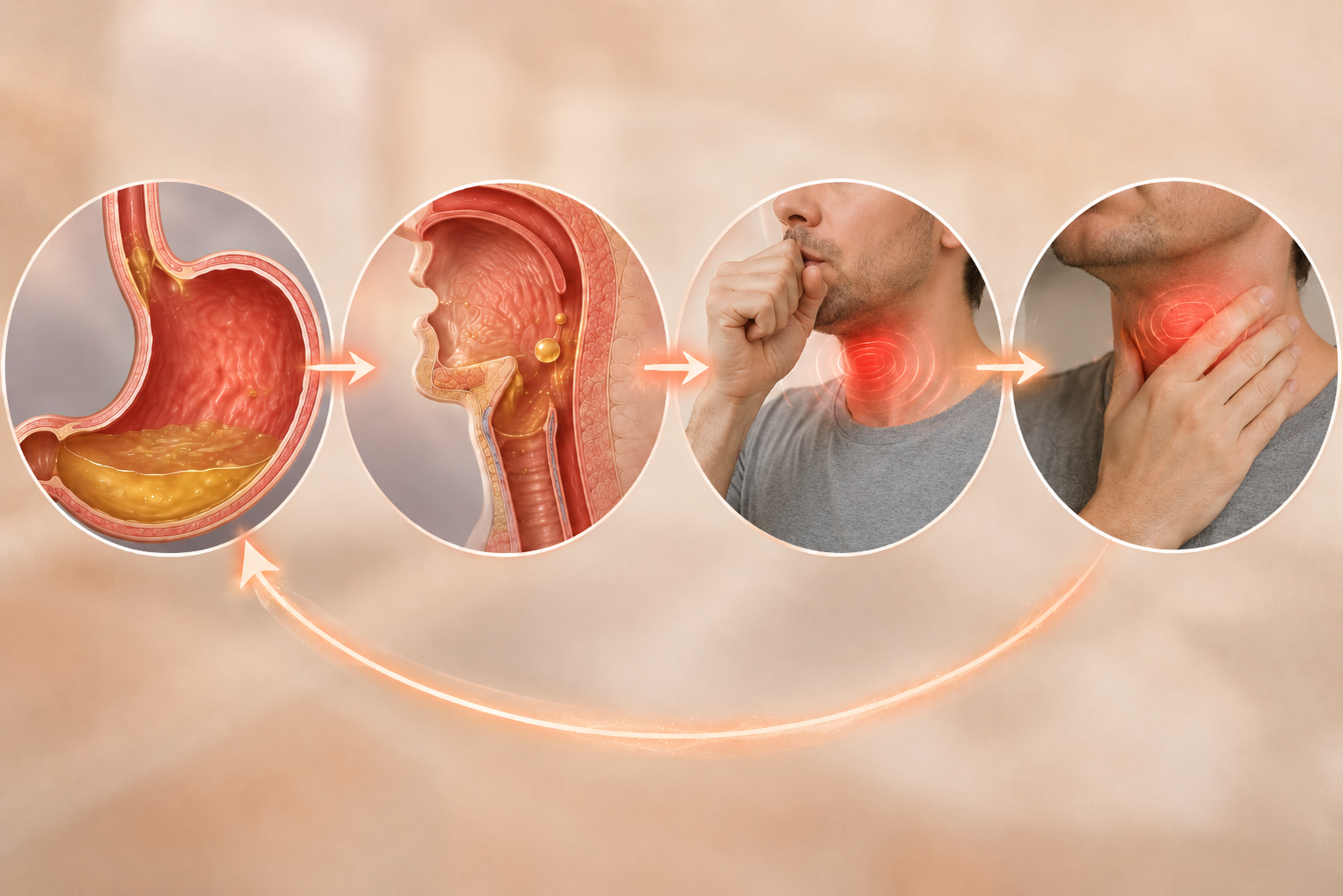
This pattern is often called laryngopharyngeal reflux (LPR), or “silent reflux.” It happens when stomach contents travel high enough to irritate the throat and voice box.
What Is Silent Reflux?
Normally, muscles at the lower and upper ends of the esophagus help keep stomach contents where they belong. When this protective barrier does not work effectively, stomach contents can move upward.
With typical gastroesophageal reflux, symptoms often remain centered around the stomach, chest, and esophagus. With silent reflux, the reflux may travel farther upward and reach the throat and larynx—the area containing the vocal cords.
Typical Acid Reflux
- Heartburn
- Acid regurgitation
- Sour or bitter taste
- Chest discomfort after meals
Silent Reflux
- Throat clearing
- Hoarse voice
- Chronic cough
- Lump or irritation in the throat

Why Is It Called “Silent” Reflux?
“Silent” does not mean there are no symptoms. Instead, it means the usual reflux symptoms—especially heartburn—may be absent.
Because of this, silent reflux can easily be mistaken for seasonal allergies, postnasal drip, a lingering cold, voice strain, sinus problems, or airway irritation.
For some people, the throat may actually be the first place where reflux becomes noticeable.
7 Signs of Silent Reflux
Constant Throat Clearing
Reflux can irritate tissues around the throat and voice box, creating a persistent sensation of mucus, dryness, or something that needs to be cleared.
Hoarseness—Especially in the Morning
Nighttime reflux may irritate the vocal cords, leaving the voice rough, weak, or unusually deep when you first wake up.
A Chronic Dry Cough
Irritation higher in the throat may trigger a cough reflex even when there is little or no obvious digestive discomfort.
Feeling Like Something Is Stuck
A persistent lump or tight feeling in the throat is often called globus sensation. Irritation around the throat and esophagus may contribute to it.
Excess Mucus or Phlegm
Reflux irritation may create the feeling that mucus is constantly collecting in the throat, leading to frequent swallowing or clearing.
A Persistent Irritated Throat
Repeated exposure to refluxed stomach contents may irritate the sensitive tissues of the upper throat and voice box.
Difficulty Swallowing
Swallowing may begin to feel uncomfortable, unusually tight, or different. Because this symptom can have several causes, persistent or worsening difficulty swallowing should be medically evaluated.
Why Can Reflux Irritate the Throat So Easily?
The esophagus is designed to tolerate occasional exposure to stomach contents better than the tissues around the throat and voice box.
The larynx is much more sensitive, which means even relatively small amounts of reflux may contribute to noticeable throat symptoms.
This can create a frustrating cycle in which the throat never seems to fully settle. Because the discomfort occurs far from the stomach, the digestive connection may not be immediately obvious.
Why Does Silent Reflux Happen?
Silent reflux rarely has one single trigger. Daily habits, food choices, body position, and individual digestive function can all influence how often reflux occurs.
Eating Before Bed
Lying down shortly after eating makes it easier for stomach contents to move upward.
Large Meals
A very full stomach creates additional pressure and may increase the likelihood of reflux.
Food & Drink Triggers
Coffee, alcohol, chocolate, high-fat foods, spicy foods, citrus, tomatoes, and mint may trigger symptoms in some people.
Excess Abdominal Pressure
Extra pressure around the abdomen can make it easier for stomach contents to travel upward.
Smoking
Smoking can contribute to reflux while also directly irritating the throat and airways.
Hiatal Hernia
When part of the stomach pushes upward through the diaphragm, the normal reflux barrier may become less effective.
Everyday Ways to Reduce Silent Reflux
Small changes in meal timing, food habits, and sleep position can sometimes make a meaningful difference.
Leave Time Before Bed
Try to finish your last substantial meal at least a few hours before lying down.
Eat Smaller Meals
Moderate portions may create less pressure inside the stomach than very large meals.
Track Personal Triggers
A food-and-symptom diary may reveal patterns involving meals, caffeine, alcohol, or timing.
Elevate the Upper Body
Stable upper-body elevation may help people who notice reflux mainly during the night.
Maintain a Healthy Weight
When appropriate, reducing excess abdominal pressure may help improve reflux symptoms.
Stop Smoking
Avoiding smoking supports both reflux control and the health of the throat and vocal cords.
When Throat Symptoms Should Not Be Ignored
Not every chronic cough, hoarse voice, or throat sensation is caused by reflux. Persistent symptoms deserve attention, especially when warning signs appear.
Supporting a Calmer Daily Environment With Spooky2 Scalar
Spooky2 Scalar creates a Scalar energy field between the Transmitter and Receiver, surrounding the body in a gentle environment that may support deep relaxation, nervous-system balance, cellular vitality, and natural recovery.
For people dealing with silent reflux, this may be especially helpful when stress and physical tension contribute to digestive or throat discomfort.
Scalar Energy Field
Creates a relaxing whole-body wellness environment that can become part of a calm evening routine.
Molecular Scalar
Can be explored with personally selected wellness substances that suit individual digestive needs, while avoiding personal reflux triggers.
Rife Scalar
Related programs can be explored using terms such as Acid Reflux, GERD, Esophagus, or Throat for more focused wellness support.
Final Thoughts
Silent reflux can be confusing because it does not always feel like a digestive problem.
A morning voice that never sounds quite right, a cough that refuses to disappear, constant throat clearing, or the sensation of something stuck in the throat may all point toward a connection farther down the digestive tract.
Recognizing the pattern, identifying personal triggers, adjusting meal timing, and improving nighttime habits can all help create a more comfortable environment for both the digestive system and the throat.
Summer Healing Month Is Ending Soon
There are less than 3 days left to enjoy our summer savings. If Spooky2 Scalar has been on your mind, now is the time to take another look before the promotion ends.

Spooky2 Scalar
A simple starting point for creating a Scalar wellness environment at home.
- Pure Scalar, Molecular Scalar & Scalar Harmony
- Strong Scalar field performance
- Easy to set up and operate

Spooky2 Scalar GX Pro Essential Kit
A more complete Scalar setup for users looking to explore multiple wellness modes and Biofeedback.
- Pure, Molecular, Rife Scalar Modes & Scalar Harmony
- Integrated Scalar Biofeedback Scanning
- Flexible, personalized wellness support
National Institute of Diabetes and Digestive and Kidney Diseases — Acid Reflux (GER & GERD) in Adults
Cleveland Clinic — Laryngopharyngeal Reflux (LPR)
Johns Hopkins Medicine — Gastroesophageal and Laryngopharyngeal Reflux