

Introduction
According to the Centers for Disease Control and Prevention (CDC), approximately 9.2 million adults in the United States live with gout, making it one of the most common forms of inflammatory arthritis. Millions more have elevated uric acid levels without realizing it.
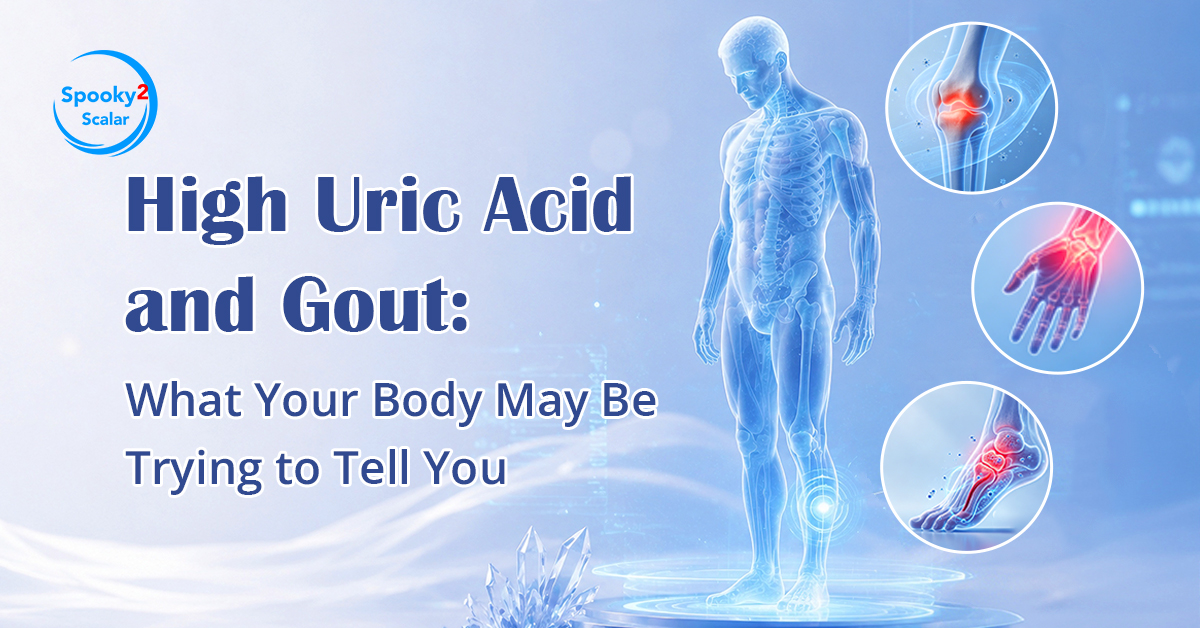
While gout is often associated with sudden pain in the big toe, high uric acid may be affecting much more than your joints. Emerging research has linked elevated uric acid levels to chronic inflammation, kidney dysfunction, metabolic syndrome, cardiovascular health concerns, and overall wellness.
Understanding why uric acid builds up—and what your body may be trying to tell you—can be an important step toward better long-term health.
What Is Uric Acid?
Uric acid is a natural waste product formed when the body breaks down substances called purines.
Purines are found naturally in the body and in many foods, including:
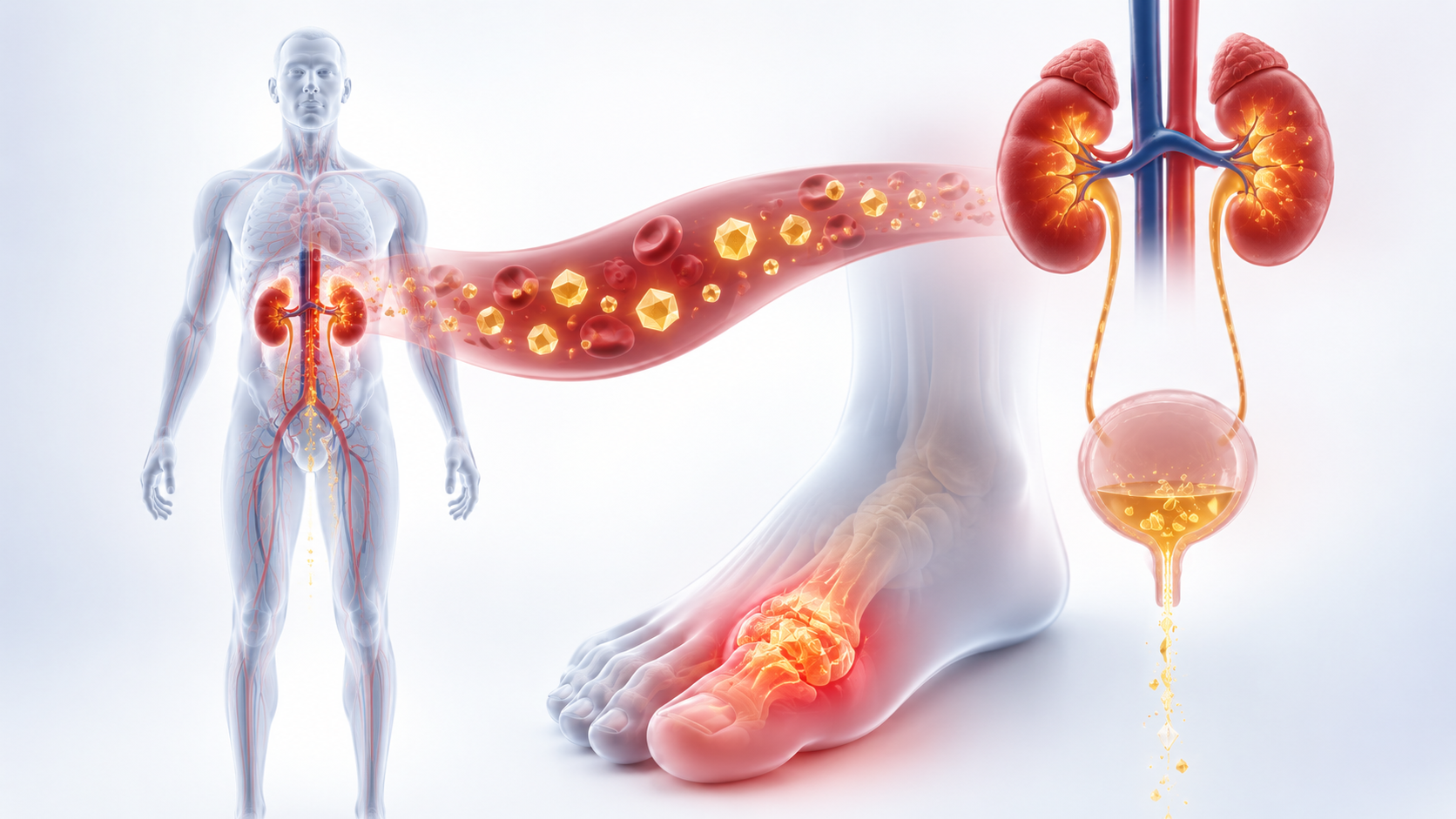
Normally, uric acid dissolves in the bloodstream, passes through the kidneys, and leaves the body through urine.
Problems arise when:
When uric acid levels remain elevated, crystals may begin forming in joints and tissues, leading to inflammation and pain.
Understanding Gout
Gout is one of the most well-known consequences of high uric acid levels.
It occurs when needle-like uric acid crystals accumulate in joints, triggering an intense inflammatory response.
Common symptoms include:
Although the big toe is the most commonly affected joint, gout can also impact the ankles, knees, wrists, fingers, and elbows.
For many people, gout attacks seem to appear without warning, often during the night or early morning hours.
The Hidden Health Risks of Long-Term High Uric Acid
Many people only become concerned about uric acid when a painful gout attack occurs. However, elevated uric acid levels may affect the body long before joint symptoms appear.
Over time, persistent hyperuricemia may contribute to a variety of health challenges beyond gout itself.
Increased Inflammatory Burden
Uric acid crystals can trigger inflammatory responses throughout the body. Even when obvious symptoms are absent, ongoing inflammation may place additional stress on tissues, joints, and organs.
Chronic inflammation has been linked to numerous health concerns and may affect overall well-being over time.
Kidney Stress and Kidney Stones
The kidneys are responsible for filtering uric acid from the bloodstream.
When uric acid levels remain elevated for extended periods, the kidneys may face an increased workload. In some individuals, uric acid can also contribute to the formation of kidney stones, which may cause significant discomfort and further strain kidney function.
Metabolic Dysfunction
Researchers have identified strong associations between elevated uric acid and several metabolic conditions, including:
Some experts now view high uric acid as an early warning sign of broader metabolic imbalance rather than simply a joint condition.
Cardiovascular Health Concerns
Studies have suggested that elevated uric acid levels may be associated with cardiovascular risk factors such as:
While research continues, maintaining healthy uric acid balance is increasingly recognized as an important component of overall cardiovascular wellness.
Reduced Mobility and Quality of Life
For individuals who develop gout, recurring flare-ups can significantly affect daily activities, exercise habits, sleep quality, and overall comfort.
Over time, repeated inflammation may lead to joint damage and reduced mobility if not properly managed.
How Scalar Energy May Support Overall Wellness
Scalar energy is believed to support the body through energetic balance, relaxation, and improved cellular communication.
Although scalar energy is not intended to diagnose, treat, or cure gout, many people explore it as part of a broader wellness strategy.
Supporting Relaxation
Stress is known to influence inflammation, recovery, and overall metabolic health.
A calmer, more balanced nervous system may help create a more favorable environment for healing and recovery.
Supporting Circulation
Healthy circulation is essential for nutrient delivery, waste removal, and overall wellness.
Supporting circulation may be particularly important when addressing inflammation and long-term metabolic balance.
Supporting Recovery and Balance
By helping create a more balanced internal environment, scalar energy may support the body's natural healing and self-regulation processes.

Using Spooky2 Scalar for Gout and Uric Acid Support
Spooky2 Scalar creates a continuous scalar energy field that supports the body's natural balancing and recovery processes. Because elevated uric acid is closely associated with inflammation, kidney function, circulation, and metabolism, many people choose to incorporate scalar energy as part of a broader wellness strategy.
For additional support, nutritional supplements, herbal extracts, or compounds associated with kidney health and uric acid management can be placed within the scalar field. Their molecular information is then transmitted throughout the scalar field, providing a unique way to combine scalar energy with existing wellness protocols.
The Spooky2 software library also contains programs related to gout, uric acid, kidney support, inflammation, arthritis, and joint discomfort. These can be used with Rife Scalar to provide more targeted frequency support.
In addition, the Spooky2 peptide library includes protocols associated with inflammation support, tissue repair, metabolic wellness, and healthy aging. Combined with scalar energy, frequencies, and molecular support, these programs offer a comprehensive approach to supporting long-term wellness.
Final Thoughts
High uric acid is often viewed as a joint problem, but its effects may extend far beyond occasional gout attacks. From inflammation and kidney health to metabolism and cardiovascular wellness, elevated uric acid may be an important signal that the body is seeking greater balance.
Alongside healthy lifestyle habits, Spooky2 Scalar offers a unique approach that may help support relaxation, energetic balance, and the body's natural healing processes—creating a more supportive environment for long-term wellness.
Discover how Spooky2 Scalar may help support energetic balance, recovery, and long-term wellness at home.
Explore Spooky2 Scalar →