

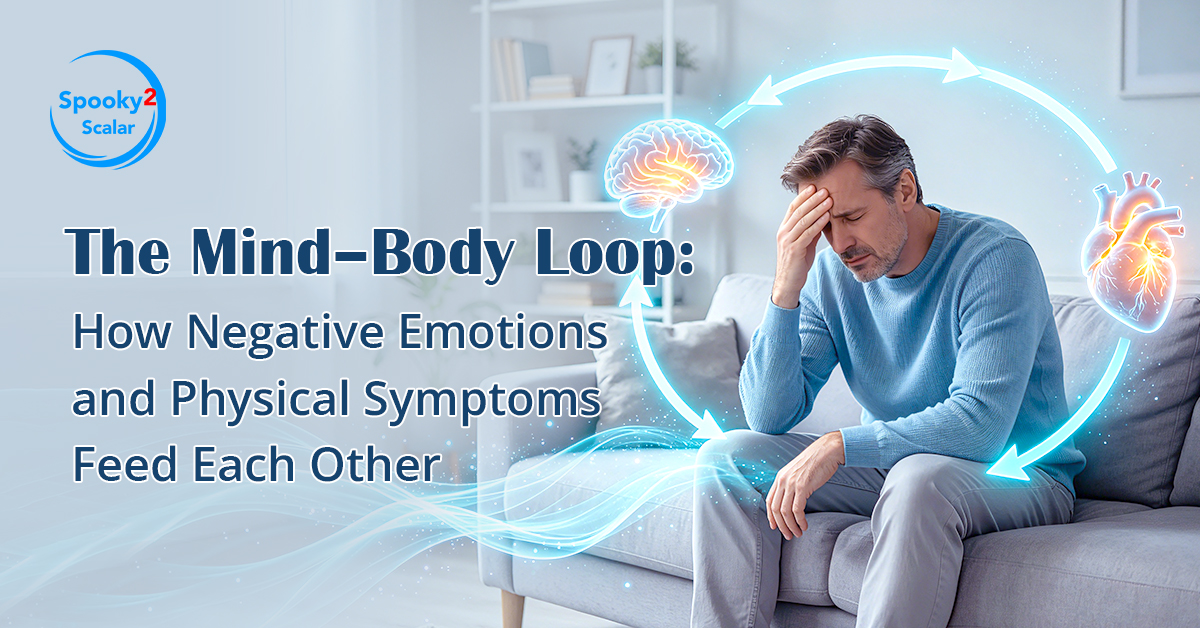
When a Difficult Feeling Refuses to Stay “Just Emotional”
A stressful thought appears.
That worry creates even more tension.
Before long, the original emotion and the physical discomfort are strengthening each other.
This is the mind–body loop: emotions influence physical sensations, while those sensations influence how we think and feel.
Stress can appear through headaches, muscle tension, digestive discomfort, poor sleep, fatigue, changes in appetite, and difficulty concentrating—not only through obvious feelings of worry or sadness.
The goal is not to eliminate every negative emotion. Anger, sadness, fear, and disappointment are normal parts of being human. The goal is to notice when a temporary feeling has become a repeating cycle that keeps both the mind and body under strain.
What Is the Mind–Body Loop?
Your brain and body are constantly exchanging information.
When you feel threatened, worried, angry, or emotionally overwhelmed, the nervous system may activate the stress response. Heart rate and breathing can increase, muscles tighten, and the body becomes more alert. This reaction is useful when you need to respond to a real challenge.
The problem begins when the emotional signal continues long after the immediate situation has passed.
A negative thought may create physical tension. That tension may then make you feel less safe, more uncomfortable, or more worried. Your brain notices those sensations and produces another wave of stressful thoughts.
The loop continues.
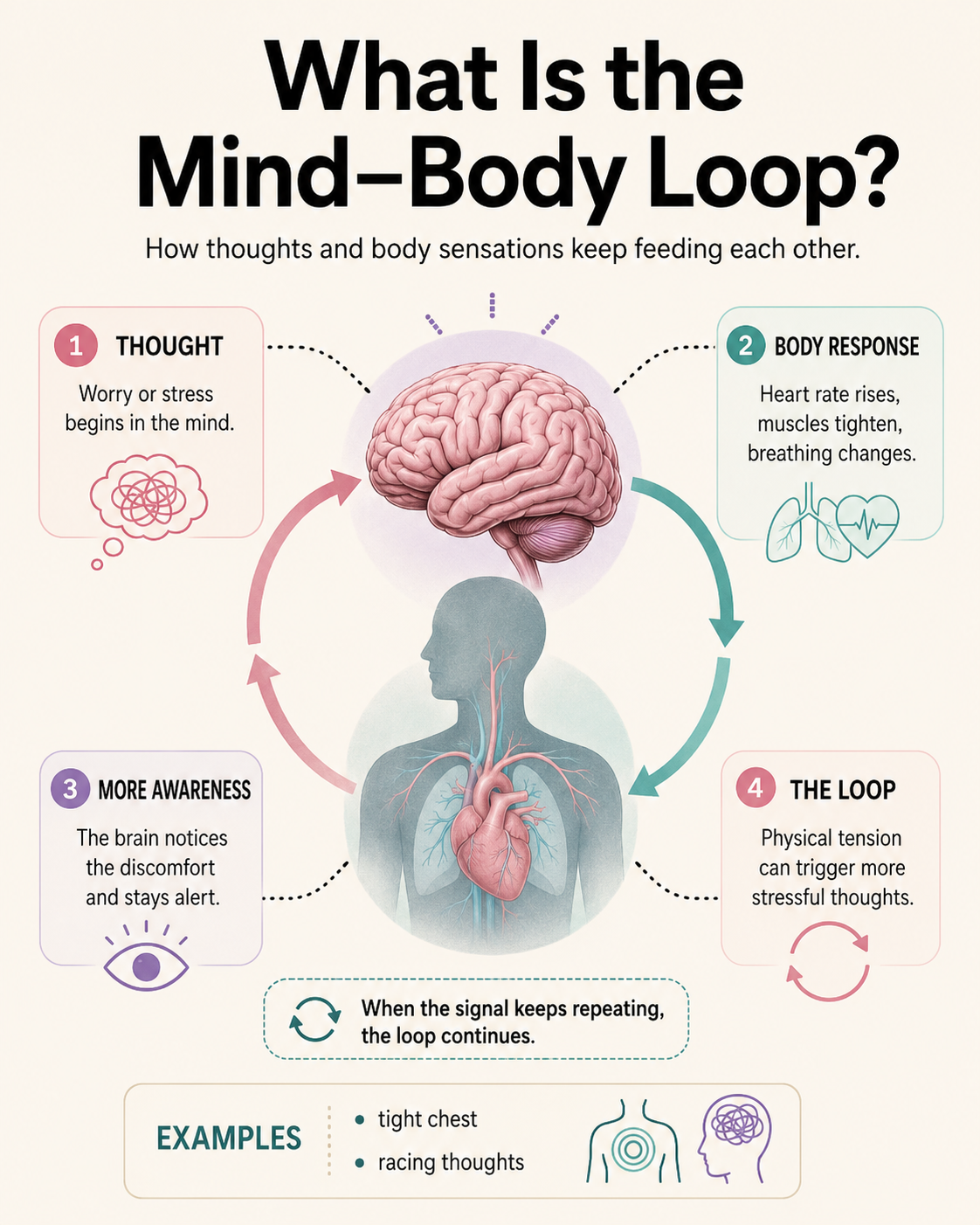
The Loop in Four Steps
An Emotion Appears
You feel worried, frustrated, guilty, sad, or overwhelmed.
The Body Reacts
Your jaw tightens, your heart beats faster, your breathing changes, or your stomach becomes uncomfortable.
The Sensation Creates More Worry
“Why do I feel like this?”
“What if something is wrong?”
“Why can’t I relax?”
The Emotion Becomes Stronger
The added worry increases tension, making the physical sensation even more noticeable.
Recognizing this pattern is often the first step toward interrupting it.
7 Ways Negative Emotions May Show Up in the Body
Muscle Tension That Never Fully Releases
Stress commonly appears in the jaw, shoulders, neck, and lower back.
You may not notice yourself tightening these muscles during the day, but by evening they can feel stiff, tired, or sore.
Digestive Discomfort
The brain and digestive system communicate continuously.
During emotional stress, some people experience nausea, bloating, stomach discomfort, constipation, diarrhea, or changes in appetite.
Headaches and Body Aches
Persistent worry and tension may contribute to headaches or make existing discomfort feel more noticeable.
When the body remains alert, it can become difficult to fully release muscular and mental tension.
Restless or Unrefreshing Sleep
You may feel exhausted but still struggle to fall asleep because your mind continues replaying conversations, problems, or imagined outcomes.
Poor sleep can then reduce emotional resilience the following day, making the same worries feel even harder to manage.
A Racing Heart or Shallow Breathing
Strong emotions can create very physical reactions.
Anxiety and stress may be accompanied by a rapid heartbeat, sweating, shortness of breath, dizziness, or chest tightness.
New, severe, or unexplained chest symptoms should always be medically evaluated rather than assumed to be emotional.
Fatigue and Low Motivation
Emotional strain requires energy.
Constantly monitoring problems, suppressing feelings, or preparing for something to go wrong can leave you feeling physically exhausted—even on days when you have done very little.
Increased Sensitivity to Discomfort
When you are already emotionally overwhelmed, ordinary sensations may feel harder to tolerate.
A small ache, an upset stomach, or a poor night’s sleep may trigger more concern than usual, feeding the loop again.
Quick Mind–Body Check
How many of these feel familiar?
Recognizing several of these patterns does not mean that your symptoms are “all in your head.” Emotional and physical experiences are both real. It simply suggests that supporting one side of the loop may also help calm the other.
How to Gently Interrupt the Loop
Name What You Are Feeling
Instead of saying, “Something is wrong with me,” try:
Naming the emotion can create a small amount of distance between you and the experience.
Relax the Body First
You do not always need to think your way out of an emotional state.
Slow breathing, gentle stretching, walking, or deliberately relaxing the jaw and shoulders may help send the body a signal that the immediate threat has passed.
Relaxation practices are intended to activate a response associated with slower breathing, a lower heart rate, and reduced physical arousal.
Question the Interpretation
A physical sensation can be uncomfortable without being dangerous.
Create a Daily Emotional Release
Journaling, talking with someone you trust, spending time outdoors, listening to calming music, or allowing yourself to cry can prevent emotions from remaining unacknowledged.
Seek Support When the Loop Persists
Professional support may be helpful when emotional or physical symptoms are severe, worsening, interfering with daily life, or continuing for two weeks or longer.
Persistent physical symptoms should also be assessed by a qualified healthcare professional so that medical causes are not overlooked.
How Scalar Energy May Help Restore Mind–Body Balance
Negative emotions can keep the nervous system under tension, while physical discomfort may reinforce worry and emotional strain. Scalar energy creates a calm, balanced field that may help the body move away from prolonged stress, release tension, and settle into a more peaceful state. By supporting the body’s energetic balance, it may also help the body feel recharged and create better conditions for natural recovery.
Spooky2 Scalar brings this supportive energy into a simple at-home wellness routine. Used during rest, meditation, or breathing exercises, it can help create a restorative environment for emotional calm, physical comfort, and natural self-regulation—allowing the mind and body to return to balance together.

Final Thoughts
Negative emotions do not remain neatly contained in the mind.
They may change how you breathe, sleep, digest food, hold your muscles, interpret discomfort, and move through the day. At the same time, physical symptoms can influence your thoughts and make difficult emotions feel more intense.
The encouraging part is that the loop can also work in a positive direction.

Create a Calmer Space for Your Mind and Body
Bring a powerful scalar energy field into your home and create a supportive environment for relaxation, renewed energy, and everyday mind–body balance.
Explore Spooky2 Scalar →